
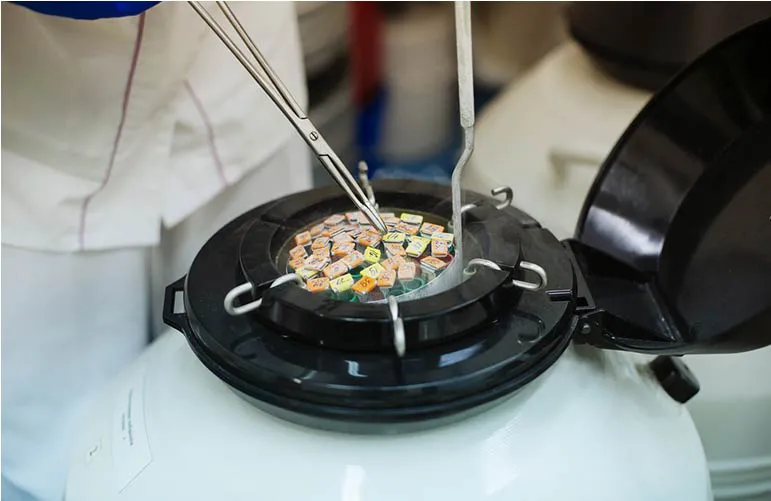
Vitrification
Vitrification rapidly cools eggs or embryos into a glass-like state for storage, helping to minimize damaging ice-crystal formation.
Why vitrification is used
Eggs or embryos may be preserved for later fertility treatment. Embryos remaining after an IVF cycle may be stored rather than transferred immediately. Egg preservation can also be discussed when medical treatment or personal circumstances may affect future family planning.
Freezing and warming
A laboratory uses protective solutions and rapid cooling before storage at very low temperatures. When treatment is planned, the eggs or embryos are warmed and assessed. The next stage depends on whether eggs or embryos were preserved.
What affects the outcome?
Not every egg or embryo survives warming, and survival does not guarantee pregnancy. Age at egg collection, quality and the subsequent treatment plan matter. Ask about laboratory outcomes, consent, storage costs and arrangements for future use before starting.
This information supports a discussion with your doctor. Suitability, availability and any referral arrangements should be confirmed with the hospital. Outcomes vary with individual circumstances.
Further reading: Vitrification patient information
All infertility services